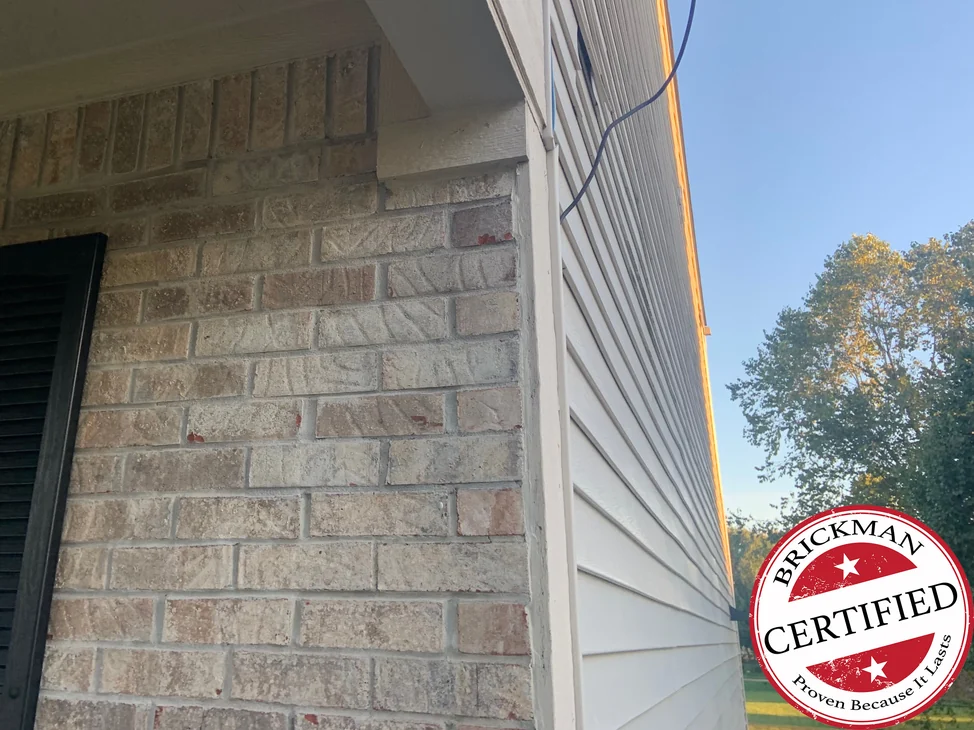
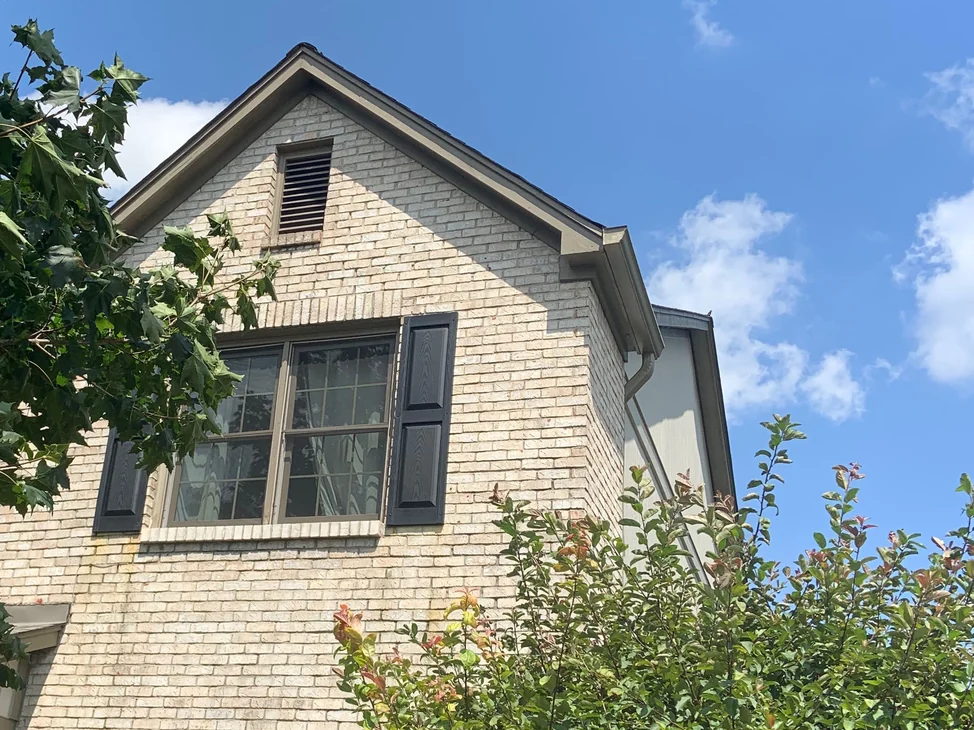
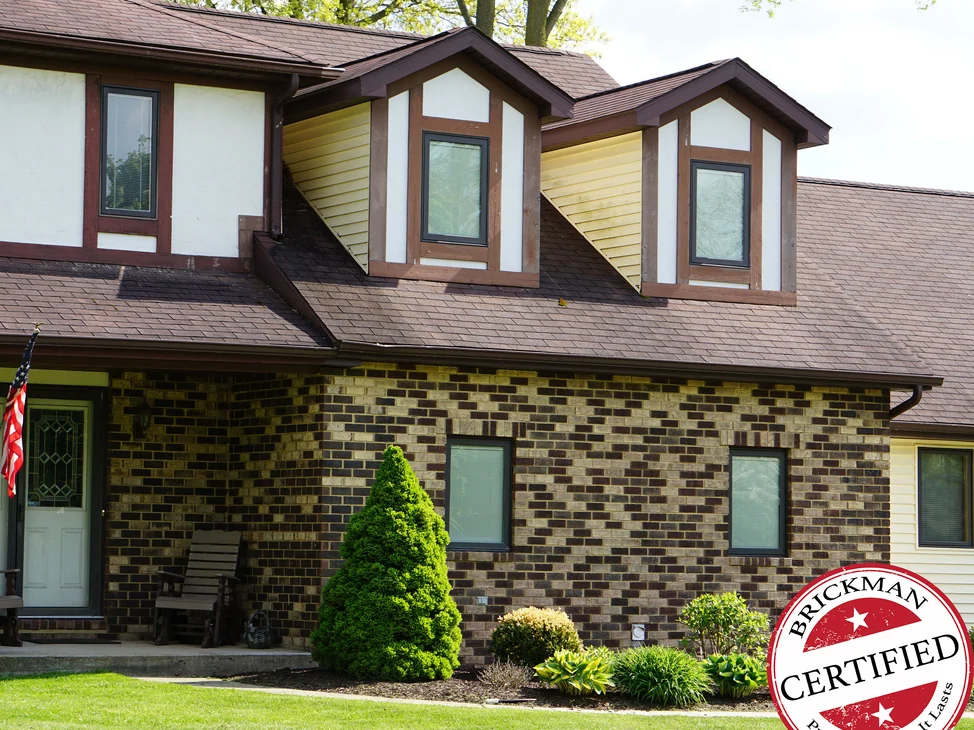
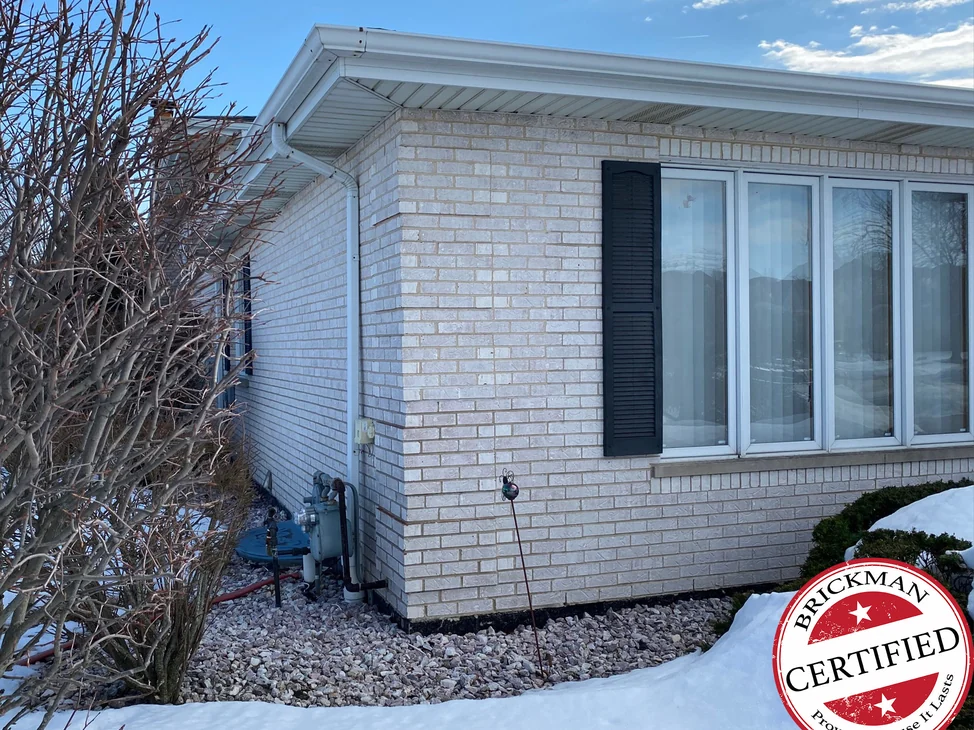
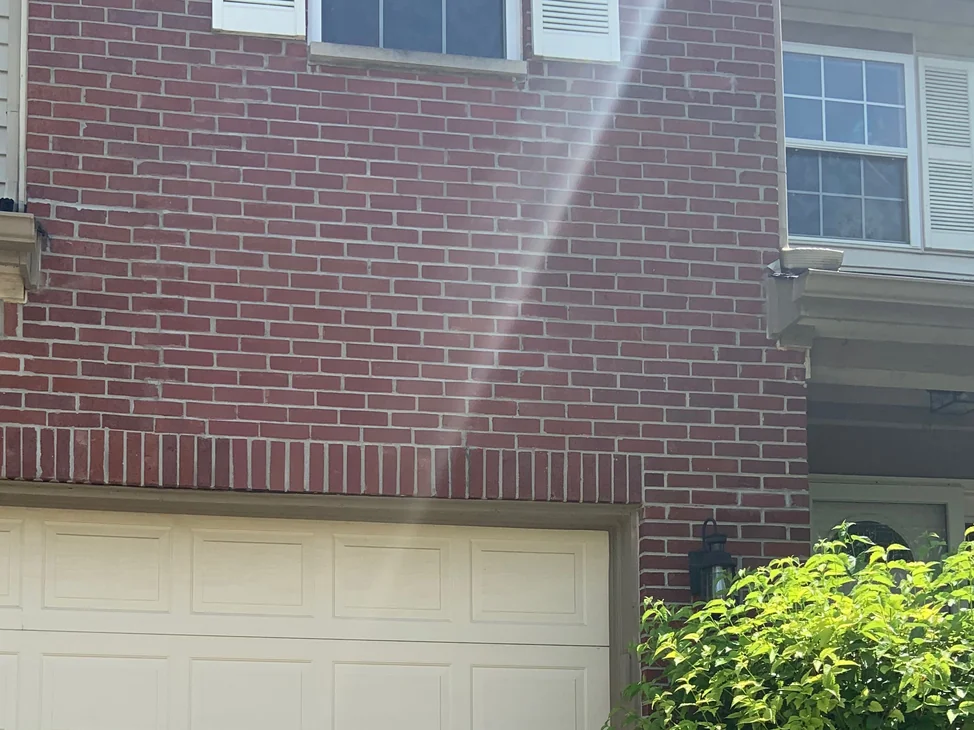
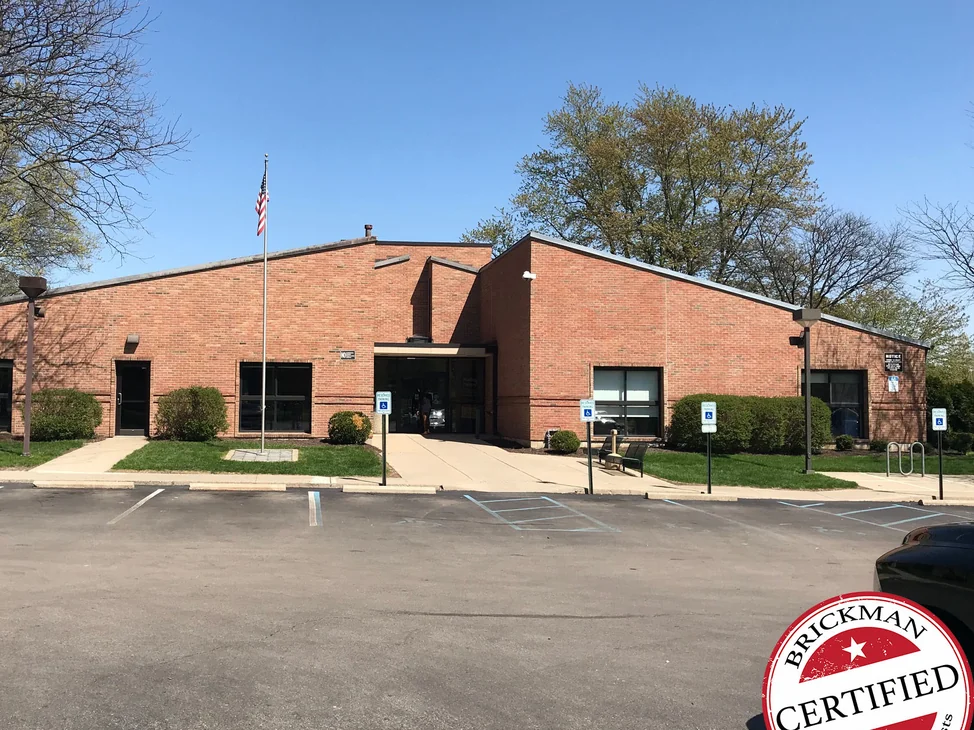
When does mortar come out the wrong color?
Mortar color is something people call us about a lot, and nearly every call comes soon after new masonry goes in. These are the usual situations.
- New tuckpointing that stands out. Fresh repair mortar looks much darker than the wall for days after it goes in. If it still stands out after about 30 days, the shade is usually close and only needs to go lighter or darker.
- Uneven joints on new construction. On a big job, different crew members tool joints at different stages of cure, some too wet and some too set, and each leaves a slightly different color and finish.
- A mortar color that was simply wrong. Most often on small sections of stone or brick veneer on new homes, where the joints dried far brighter than anyone expected. Often nobody in particular is at fault.
- Additions. New mortar beside old can cure to a different color from the original, even when the mason did everything right.
- Joints you want darker or lighter. Nothing went wrong; the owner wants the joints to read differently against the brick.
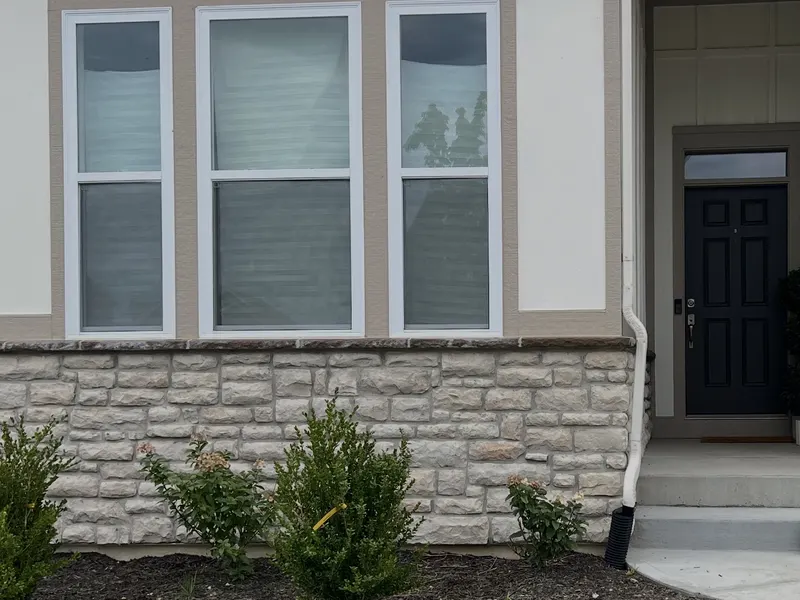
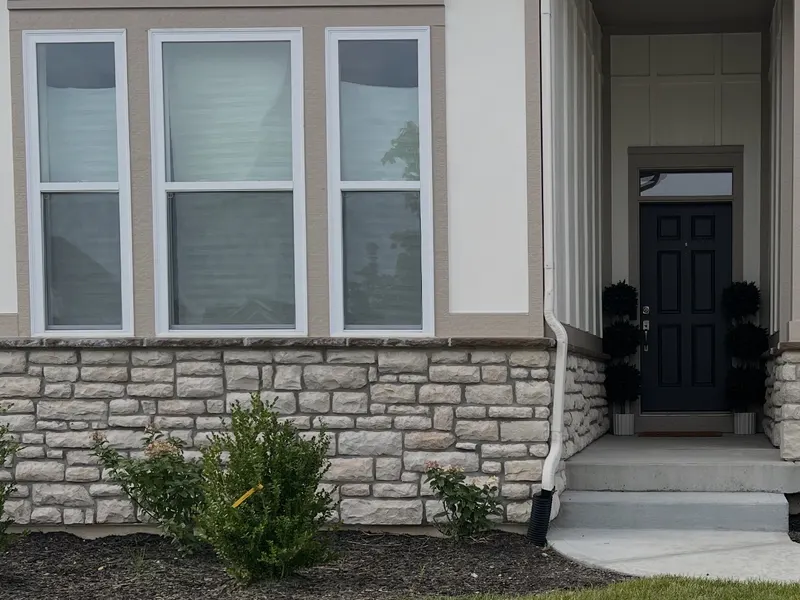
How long should new mortar cure before it is stained?
About 30 days. That is our rule of thumb for staining any new masonry, and about how long new mortar takes to show its true color. Hot, dry air speeds curing up and cold, damp air slows it down. In the Midwest, 30 days is the usual mark.
The exception is a mix that is plainly the wrong color. A month of curing will not change that answer, so we can stain inside the 30 days, and builders usually ask us to so the job keeps moving.
Stain the joints, or grind them out?
Stain them, when color is the only thing wrong. The sound mortar stays in the wall, and nothing is cut out, repointed and left to cure all over again. The Brick Industry Association lists staining mortar joints alone among the accepted uses of brick stain, and notes that properly applied stains do not affect the structural integrity of the brick or the mortar joints.
Grind them out when the problem is workmanship: joints the wrong shape or wider than the rest of the wall, badly struck, or smeared across the brick faces. Stain cannot fix those. They need to be ground out and redone, and stained afterward only if the new mortar still misses once it cures.
Can mortar be stained darker or lighter?
Both. Mortar joints are among the easiest things we stain, especially going darker: we have taken gray joints to black and light gray joints to charcoal. Going lighter is common too, from dark or gray joints to a lighter or neutral gray. The one hard case is very dark gray or black taken all the way to white, and few people ask for it.
On a historic storefront on Main Street in Carmel, the whole facade was tuckpointed first. Once the new gray mortar had cured, we stained the brick a rich dark brown and took the joints from mid gray to nearly black, about as dark as the brick itself.
Skip the shortcuts. Coffee and tea do not stain mortar. Whitewash on joints is usually a paint or latex product: it goes on smoothly, then traps moisture in the joint, the part of the wall most prone to moisture damage, and ends up patchy. Limewash is uneven and not permanent; it fades, chips and peels.
What to ask your mason before tuckpointing
Three questions settle most of this before the first joint is filled:
- Colored mortar, or plain mortar with colored sand? Those are the usual two ways mortar gets its color.
- What was used on the rest of the house? A good mason can usually tell by looking at the existing joints.
- If it still does not match after 30 days, who pays to stain it? Agreeing on that up front avoids a dispute over cost later.
What does mortar color correction cost?
Our most recent one was a brand-new store building. Several crew members had tooled the block joints at different stages, and the color shifted all over the building. The owner-developer wanted it even, and had the builder pay for it. We evened it in a single day on site, for about $4,000. Most of our corrections run $400 to $8,000, depending on area and coats, and most projects can be scheduled within one to two weeks, smaller ones sooner. More real prices are in the brick staining cost guide.
Does the warranty cover stained mortar?
Yes. Stained mortar holds its color as long as stained brick does, and we carry the same lifetime warranty on mortar as we do on brick. Every Bramwell-McKay staining project is covered by a lifetime warranty on workmanship and materials, for the life of the masonry, delivered in writing when the job is done. The warranty terms are published in full.
Who calls about mortar color?
Builders before a closeout, and the masons who laid the brick or stone. Manufacturers and suppliers, some of whom stand behind the crews that install their product and pay for the fix. Homeowners, sometimes months after an addition or a build, once the joints have cured to a color they did not expect. Builders can see how we handle color fixes for builders and contractors.
If it is the brick around the joints that stands out, that is brick color matching, and the two are often done in the same visit. We work from Carmel across Indiana, including brick staining in Indianapolis, Carmel and Bloomington.