
Brick and glass office building with flags on poles out front

Commercial Staining Services

Permanent mineral stain for commercial and institutional masonry. Full facade color changes, addition matching, manufacturer color correction, and coating removal. Vapor-permeable, no maintenance cycle, warrantied for life.

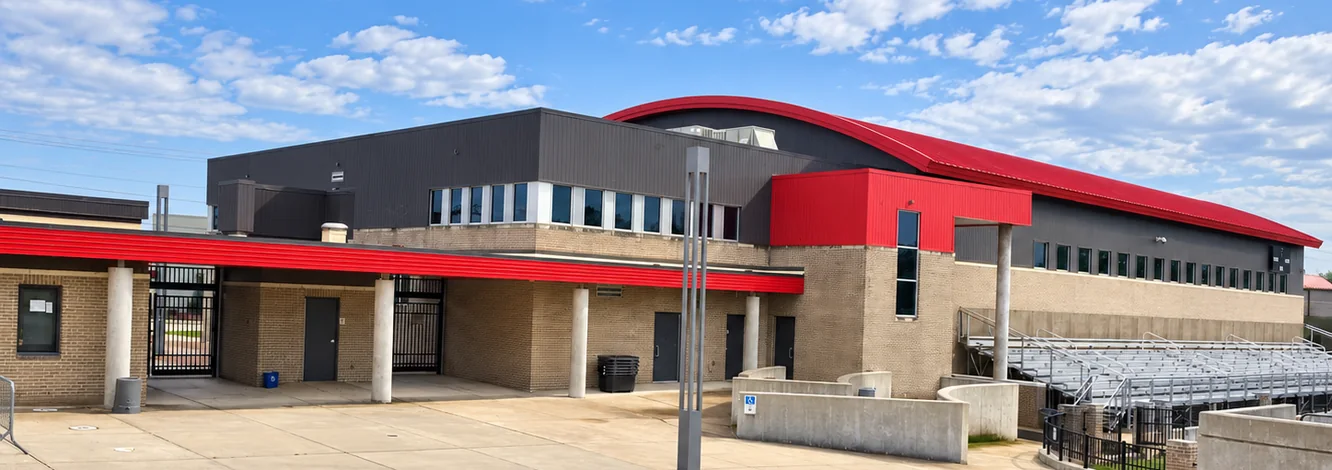
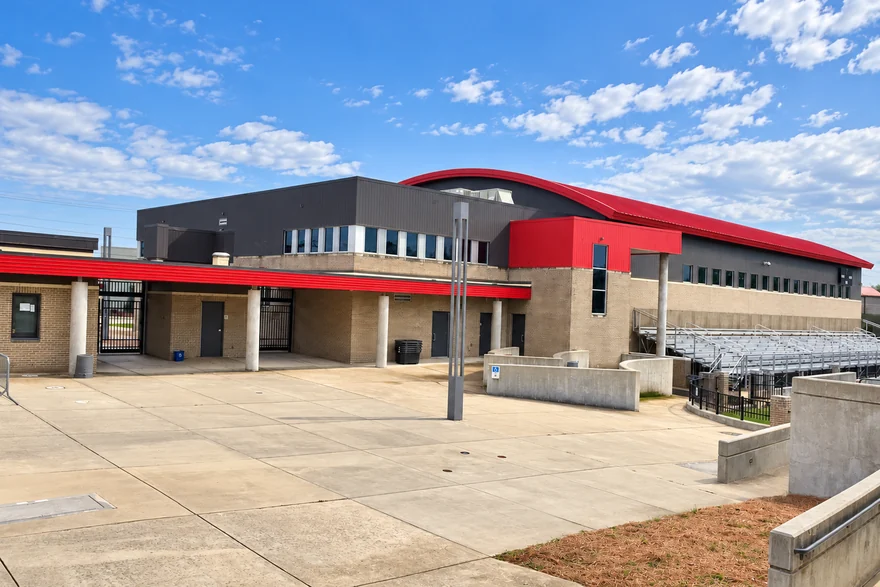
The stadium plaza at the Alabama high school in 2021, buff brick and stained mortar under the red fascia, with the bleachers beyond
A high school stadium in Alabama. The mortar ran dark and rangy across the whole school, so every joint was stained rather than cut out and repointed. Photographed again seven years later. Read case file 405

Absorbed pigment, not a coating

Mineral stain carries pigment into the pore structure of the masonry and bonds there. It changes the color of a wall without putting a layer on it, which is why there is no recoat cycle and nothing on the surface that can fail. Everything below is published either by Masonry Cosmetics, who make the system, or by the Brick Industry Association, the body American architects design brick to.

01

No film, so no failure mode

Applied materials leave no visible gloss, sheen or film on the masonry unit. There is nothing on the surface to peel, delaminate, or hold moisture behind it.

The full chemistry
02

The class the industry prefers

Mineral-based stains are "preferred due to their high water vapor permeability." Our system is in that class; the wall keeps absorbing and releasing moisture as it was designed to.

BIA Technical Note 6, March 2025 (opens in a new tab)
03

Brushed by hand, unit by unit

The specification requires application with a 100% polyester brush, by hand, individually to each masonry unit. No spraying or rolling is allowed, on any project, at any scale.

Section 04 25 10, Part 3.2 (opens in a new tab)
04

No maintenance line item

Properly applied brick stains do not require additional maintenance and do not affect the structural integrity of the brick units or the mortar joints. Nothing recurs on the building's maintenance schedule.

What the warranty covers
05

Approved on your own wall first

Color is mixed for the building, not picked from a chart, and proved on a ten square foot sample made on the actual elevation. That panel becomes the standard the work is signed off against.

How color approval works
06

The proof standard is the record

No ASTM standards exist for stain materials or their application. That is why the accepted evidence is a documented history of completed projects, with photographs and addresses, which is the format ours is kept in.

The field record

The chemistry, the substrate schedule, the wall section drawing, and the submittal list are on the architects and engineers page.

Six kinds of commercial work

Most commercial staining falls into one of these. If a wall does not fit any of them, the site assessment says so.

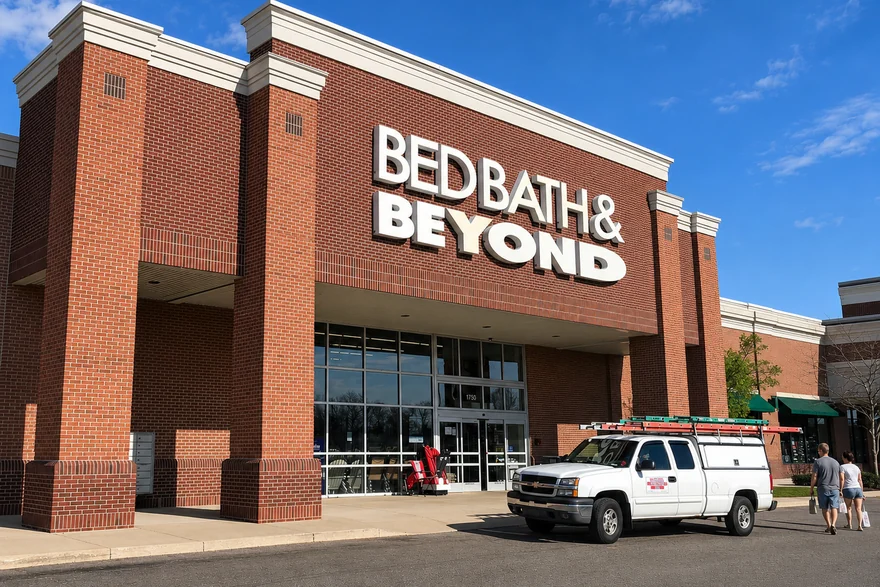
A Bed Bath & Beyond storefront in 2019, the entrance piers and the wall behind them reading as one red brick
01

Full facade color change

An entire elevation, or an entire building, brought to one target color. The specification covers clay units, block, manufactured stone, natural stone, mortar and pre-cast concrete, so a mixed elevation holds a single color across every material it is built from.

Specified when a renovation needs a new face and new masonry is not on the table.

In the photograph The owner wanted this storefront updated. The tan brick piers across the entrance were stained into the red of the wall behind them in 2001, and the front was photographed again eighteen years later. Case file 016

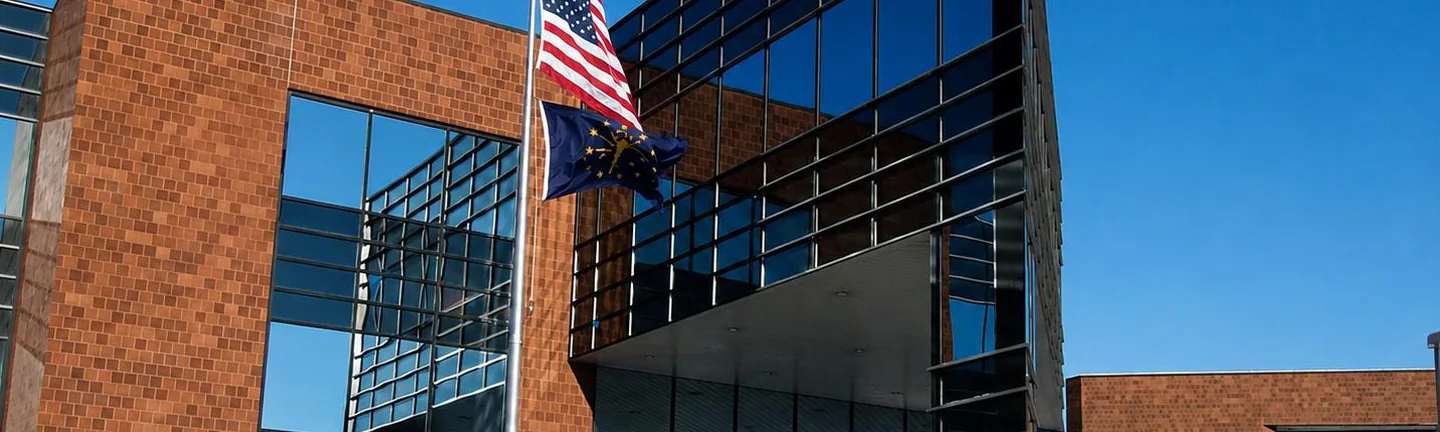
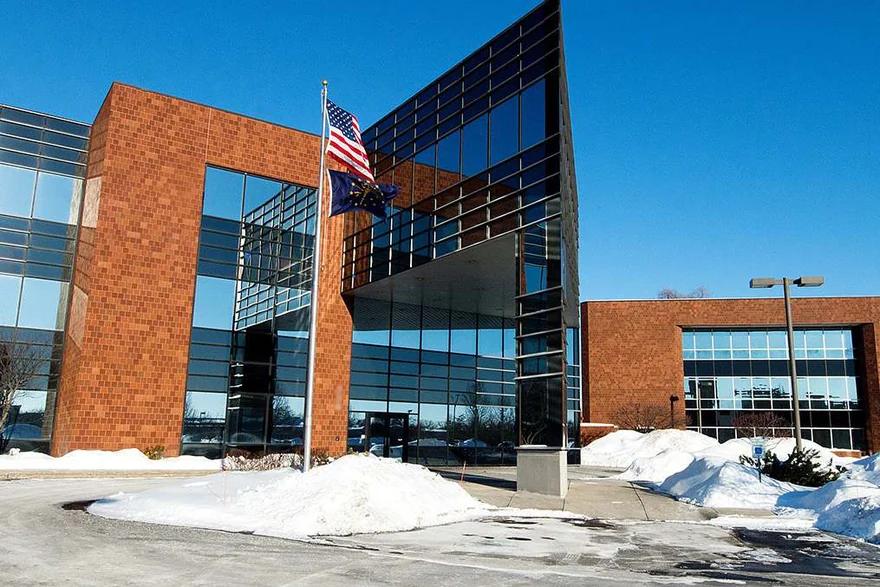
A South Bend office in 2014, brick and glass wings around the entrance, the 2002 addition reading as the same brick as the original building
02

Additions and expansions

Matched in either direction: new masonry stained to read as original, or the original brought to the addition. Both are accepted applications in the Brick Industry Association's guidance, and which direction is cheaper depends on how much wall there is of each.

Specified when the joint between old and new is the thing everybody notices.

In the photograph This office went up in 1950, and by the time it expanded in 2002 its brick was no longer made. The new brick was stained to eight recipes to match the original, and the building was photographed again twelve years later. Case file 014

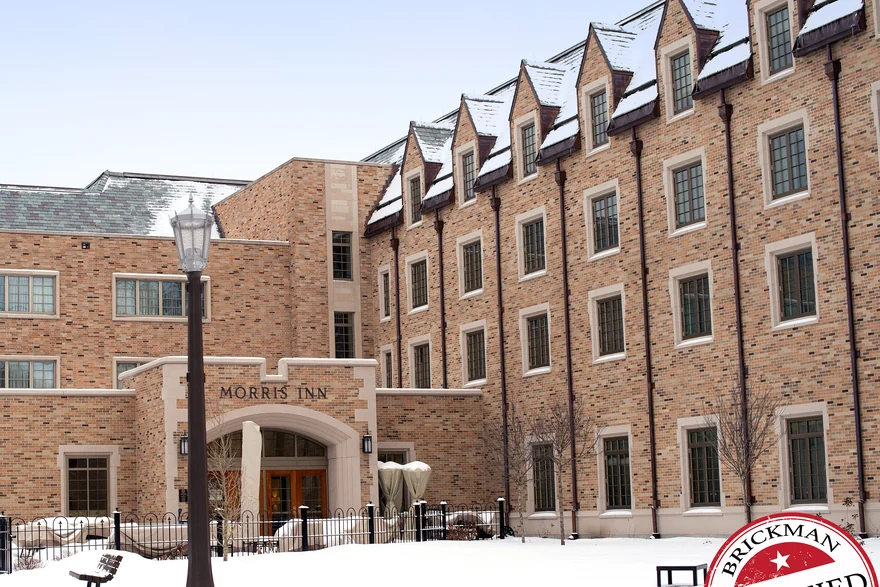
The Morris Inn on a university campus in Indiana in 2019, the carved name over the entrance and four storeys of brick reading as one even tone
03

Manufacturer color correction

Off-run deliveries, improperly blended colors, a production run that missed the approved sample by half a shade. Nothing on the wall is defective and the elevation still does not read as one building. Blending brings the outliers into the range of the units around them.

Specified when the brick is already laid and tearing it out is not the answer anyone wants.

In the photograph The brick on this campus inn was laid too light. In 2010 the light units were taken to a middle tone and darks were added over the medium ones until the wall read as one range. Photographed again nine years later. Case file 203

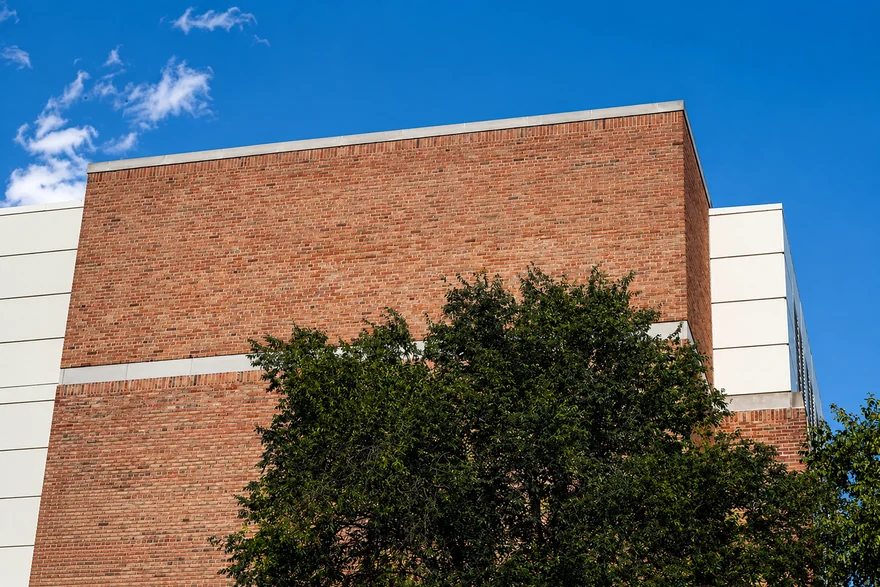
A finished commercial elevation, red brick courses banded with pale precast under a blue sky
04

Repair and tuckpointing touch-in

Replacement units and repointed areas blended back into the field, along with chips, lime pops and damage from improper cleaning. Because the stain leaves no film, the original texture stays and the repair stops being the thing the eye goes to.

Specified when the masonry repair is sound and the patch is still visible from the sidewalk.

In the photograph A finished commercial elevation, brick courses banded with precast. Brick, mortar and precast are all absorbent masonry, so one stain system holds color across all three and each keeps its own texture. Building, town and year are being confirmed. Read the file

The four-story office from across the street in 2019, one cream brick elevation under the Diocese of Grand Rapids lettering
05

Corners and special shapes

Corner units, sills, arches and other special shapes do not always come out the same color as the field brick they are laid with. Only the shape units are stained, into the range of the wall around them, and the rest of the elevation is not touched.

Specified when the field brick is right and the shapes are not: a stripe at every corner, a band under every window.

In the photograph The corner brick on this four-story office went up lighter than the wall it turned, so every return read as a stripe. The company that made the brick paid to have only the corners darkened in 2008, and the building was photographed again eleven years later. Case file 067

The stadium plaza at the Alabama high school in 2021, buff brick and stained mortar under the red fascia, with the bleachers beyond
06

Mortar and joint color

Joints alone, or brick and mortar together for a single facade color. Staining individual units also leaves the existing mortar in place, which the Brick Industry Association notes is often preferable to removing and replacing brick units or small areas of brickwork.

Specified when the mortar is the mismatch, or the wall needs to read as one tone rather than as courses.

In the photograph The mortar on the stadium gate buildings at this Alabama high school went up too rangy and too dark for the brick. Every joint was stained to one color in 2014, and the stadium was photographed again seven years later. Case file 405

Where staining is the right call, and where it is not

A water absorption test on the actual wall settles it before anyone commits. The Brick Industry Association requires one prior to staining, and it can come back no. We would rather tell you that at the assessment than after a mobilisation.

Specify staining when

  • An addition or expansion no longer matches the original masonry.
  • Spot repairs or replacement units have left visible color inconsistencies.
  • A brick delivery ran off-shade against the approved sample.
  • A facade needs one uniform color across brick, mortar, stone and precast.
  • A previous coating has failed and the wall needs to breathe again.
  • The alternative on the table is demolition and replacement, with the schedule, expense and cleaning that carries.

Staining is not the answer when

  • The brick is glazed. Glazed brick cannot be stained; the exposed surface is impermeable.
  • The face is too dense. Some unglazed brick has surfaces that will not successfully receive stain.
  • A coating has to come off first and the budget will not carry the removal. Sealers, waterproofing, paint, oil and tar all block penetration.
  • The problem is the wall, not the color. If water is getting in or the assembly is failing, staining is cosmetic work over a live defect. Fix the wall first.
  • The surface is damp, or the weather will not hold long enough to apply and cure.

The Key to Work That Lasts

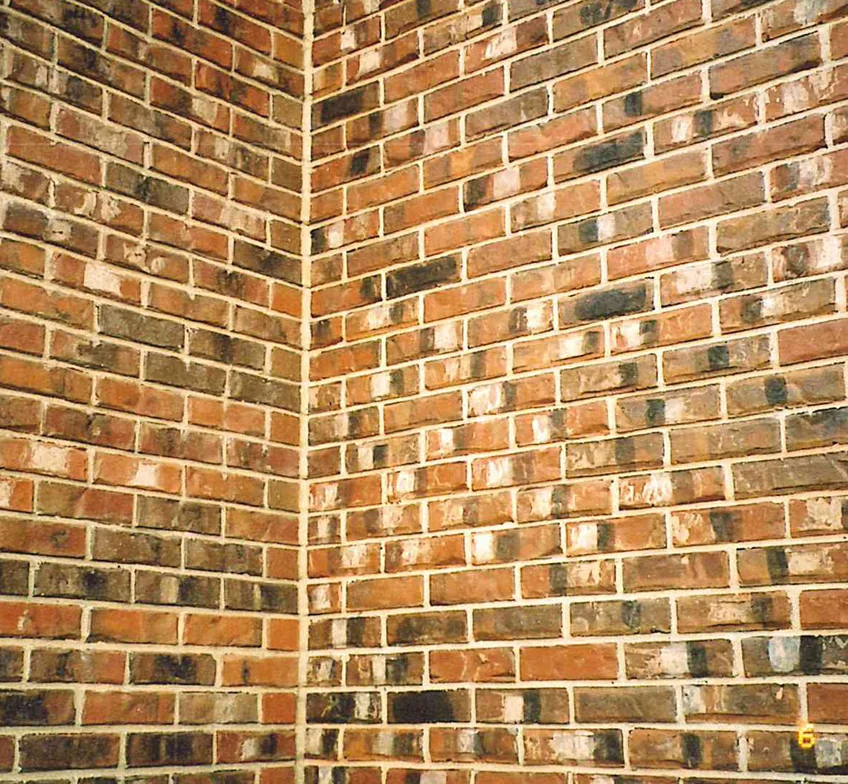
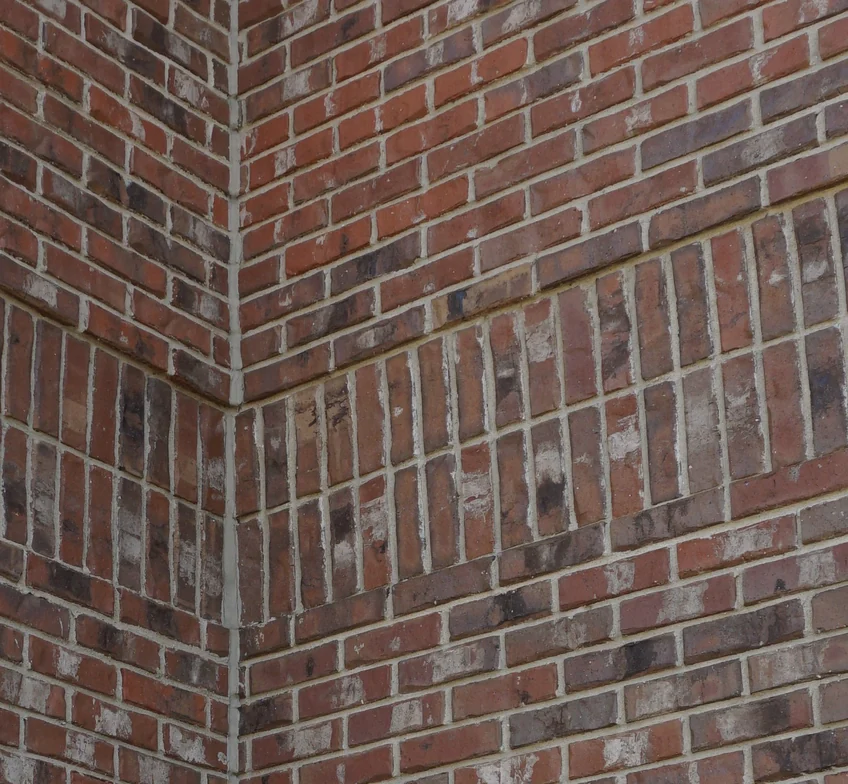
The stain we apply is made by Masonry Cosmetics, in the field since 1988. It is a mineral system, not a coating: the color goes into the brick instead of onto it. The office below was stained in 2005, and the same corner was photographed again fourteen years later.

Close view of blended brick at an outside corner in 2005, the units reading as one range
2005
Close view of the blended brick at the same outside corner in 2019, an accent course of upright units running across both faces
2019

The same corner of the same office, photographed from roughly the same position fourteen years apart, with no maintenance in between. The brick arrived in more than one color and was blended rather than torn off, at the brick manufacturer's expense.

How a commercial project runs

  1. Site assessment

    A walk of every elevation with the absorption test done on the actual wall, plus access, staging and adjacent-trade review. This is the stage where a wall gets ruled in or ruled out, and we say which before anything is priced.

    You receive Condition and access review
  2. Sample panel

    A ten square foot section of the actual wall, stained and adjusted until the target color is approved in daylight, at the distance the building is seen from. It becomes the reference standard the rest of the job is measured against.

    You receive Approved color standard
  3. Proposal

    Firm pricing based on crew time and coat counts rather than square-footage guesswork, with the scope written elevation by elevation and any coating removal carried as its own line.

    You receive Firm written price
  4. Application

    Hand application by brush, unit by unit, with section sign-offs against the approved panel as the work moves across the building. Staining proceeds only when surface and air temperatures are between 45 and 100 degrees F and the wall is dry.

    You receive Section sign-offs against the panel
  5. Closeout

    Final walk with your team, photo documentation of every elevation, and the lifetime warranty certificate issued in writing for the building and transferable when it sells.

    You receive Documented completion, lifetime warranty
On the mockup

The specification provides for up to five color-enhanced loose units for matching, and a field sample of about ten square feet made on the actual surface of the building. Nothing else is touched until that sample is approved. If it is rejected, it gets adjusted and re-approved, or the project does not proceed to full application.

The limits, stated plainly

These are in the specification, so they are in the contract. A schedule built without them is a schedule that slips.

Surface Absorbent only

Clean, fully cured, pH neutral and dry. Paint, sealers, waterproofing, oil and tar block penetration and have to come off first.

Temperature 45 to 100 °F

Surface and air both, per the specification. No staining in rain, snow, dense fog or mist.

Humidity Below 95%

Dense, smooth masonry also takes pigment more slowly than porous brick, which the absorption test tells us before anyone commits.

Afterward No sealers

A sealer applied over stained masonry voids the warranty. Cleaning is limited to plain water with no pressure washing, which is also all the wall needs.

Working on a building that stays open

Most commercial staining happens on an occupied building. Nothing about the method requires the building to close.

  • Occupancy Application is brush work by hand, not spray, so the work area is the platform and the wall in front of it. There is no overspray boundary to keep the public behind. Hours, entrances and, on a campus, the academic calendar set the schedule.
  • Access Swing stage, boom lift or scaffold, decided at the site assessment. On a tall elevation, access drives the program more than the staining does.
  • Sequencing Staining is the last masonry trade on the wall. The surface has to be clean, fully cured, pH neutral and dry before any pigment goes on, so repointing, unit replacement and cleaning all finish ahead of us.
  • Weather The application window is real and we plan for losing days to it rather than promising around it. Nothing goes on the wall outside the conditions above, on any schedule, for any reason.
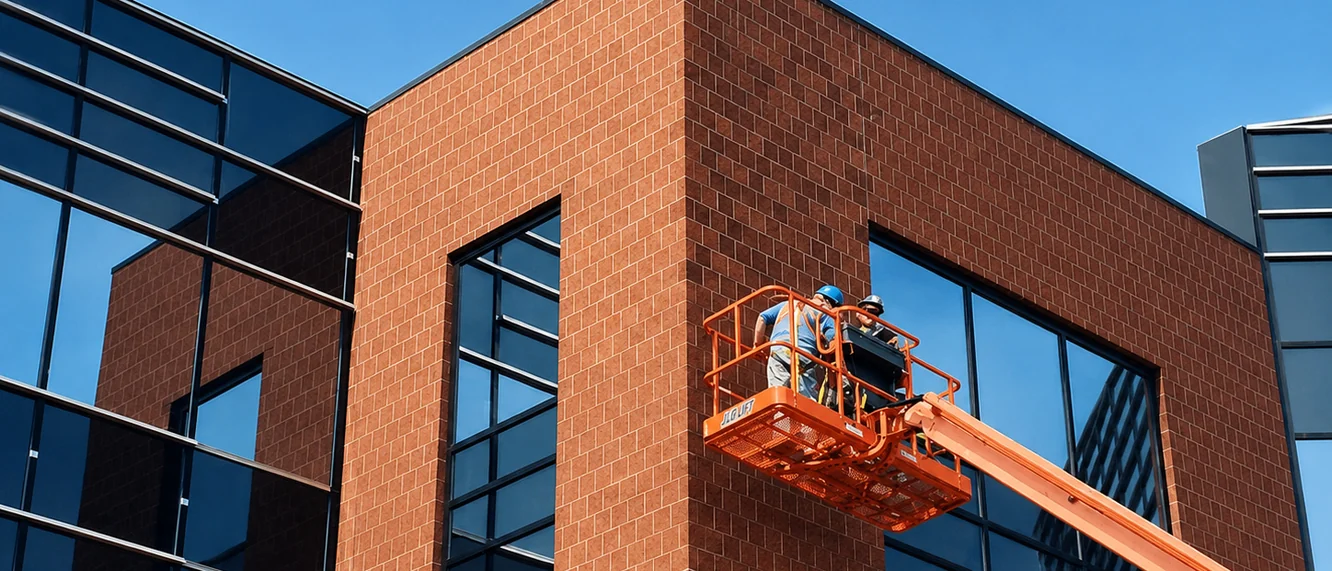
Two workers in hard hats in a boom lift at the upper corner of a brick and glass office building

Photographed, revisited, photographed again

There is no ASTM standard for masonry stains. The Brick Industry Association says so plainly, and it is the reason the accepted evidence is a documented history of finished projects, with photographs and addresses, rather than a test certificate.

The system's library runs to more than 400 case studies, banded by how long each one has held its color: past twenty years, fifteen to nineteen, ten to fifteen, seven to nine. 227 of them sit in the top band. Each was photographed at completion, revisited years later, and photographed again from the same position.

4 Weeks on site for a full campus-building color change
6 Masonry types the specification covers: clay units, block, manufactured stone, natural stone, mortar, precast
10 sq ft Field sample stained on your own building before full application
20+ Years of in-service performance the specification requires of the applicator

From a published Google review

Their expertise in brick staining, especially matching historic brick that's no longer available, is exceptional. It's not just close; they achieve a level of color and texture blending that makes repairs virtually disappear… Bramwell McKay employs master masons directly rather than relying on subcontractors, and it shows in the consistency and craftsmanship of their work… Whether it's restoration, repair, or new work that needs to tie seamlessly into an older structure, they bring a level of knowledge and execution that's hard to find.

Warren Ginder On historic brick matching, Google review

Commercial Staining FAQ

No. Mineral stain is absorbed pigment, not a film. It does not seal or trap moisture and does not clog the masonry pores, so the wall keeps absorbing and releasing moisture as designed. There is no coating to delaminate.
Clay brick, block, mortar, natural stone, manufactured stone, pre-cast concrete, and concrete pavers, provided the surface is absorbent. A water-absorption check on site confirms suitability.
Yes, in either direction. New masonry is stained to read as part of the original construction, or the original is brought to the addition. Addition matching and manufacturer color correction are among our most common commercial requests.
By crew time and coat counts, not square footage. A firm written proposal follows the site assessment, typically within a week. Coating removal, where a wall needs it, is carried as its own line rather than folded into the staining number.
A lifetime warranty on materials and workmanship, provided in writing with the project documentation. The manufacturer's certificate is issued per building, activates on full payment, and states that it is transferable to subsequent purchasers. Applying a sealer over the stained masonry voids it.
The Brick Industry Association states that mineral-based treatments naturally have no volatile organic compounds. The manufacturer's specification puts this product's VOC content at an estimated maximum of 0.01 g/g. We publish both of those and no figure of our own, because no other measurement exists in writing.

Bring Us the Project, We'll Handle the Rest

Corrections, matches, coating removal, or a full color change. We answer fast and quote in writing.

Request a Quote

Or request the specification and product documents

Call Us Request a Quote