The system
A penetrating ceramic-based mineral stain: 80 to 100 mesh mineral oxide pigments, identical to the natural pigments used in brick manufacturing, combined with a proprietary bonding chemical and water. The water carries the pigment and bonding chemical into the pore structure of the masonry, and the bonding chemical changes from liquid to solid during and after drying.
Not film-forming
The stain absorbs into the structure of the brick and permanently bonds with the clay substrate. No acrylic, no latex, no film on the surface.
Cannot peel or crack
Because the stain is completely absorbed into the masonry, there is nothing on the surface to lift, and it cannot trap water.
Moisture behavior
The oxide molecules are smaller than the masonry pores, so they do not seal in moisture or clog the pores. No quantified perm rating is published for the system; the documented statements are qualitative.
Texture preserved
The applied material leaves no visible gloss, sheen, or film, and the visual texture of the masonry is preserved, including intentional variation across a blend.
No maintenance cycle
After staining, no maintenance is needed. Cleaning should be limited to water, with no pressure washing.
Adjustable in place
Additional applications can be added on the wall to reach the desired color.
Where the color sits in the wall
- 1A continuous film on the face of the unit.
- 2Vapor leaving the wall meets the underside of that film.
- 3A film is a separate layer on the surface, so it can lift from it.
- 4Pigment carried into the pore structure, densest just below the face.
- 5No film, gloss, or sheen on the face. The texture stays visible.
- 6The oxide particles are smaller than the pores, so the vapor path stays open.
Section through the face of a masonry unit, drawn to explain the mechanism. Not to scale, and not a photograph of a section. Water-repellent stains, acrylic paint or stains containing acrylic, semi-transparent and opaque stains, and sealers are all excluded by Part 2.4 of the specification.
The specification: CSI Section 04 25 10
Masonry Cosmetics publishes a CSI-format architectural specification for the system. The provisions below are the ones specifiers ask about most, grouped as the section groups them, with the part number carried on each row so it can be found in the source.
| Provision | Requirement |
|---|---|
| Materials | |
| Basis of designPart 2.3.A, 2.3.B | Ceramic-based stain containing a colored, talcum-powder-consistency (80 to 100 mesh) pigment identical to natural pigments used in brick manufacturing, a proprietary bonding chemical, and water. No visible gloss, sheen, or film once applied. |
| VOC contentPart 2.3.C | Very low, with an estimated maximum value of 0.01 g/g. |
| Products not permittedPart 2.4 | Water-repellent masonry stains, acrylic paint or stains containing acrylic, hydrous multiple-polymer formulations of resin solids, semi-transparent stains, opaque stains, and sealers. |
| Scope and conditions | |
| Substrates in scopePart 1.1.A | Clay masonry units, block, manufactured stone, natural stone, mortar, and pre-cast concrete. |
| Temperature limitsPart 1.5.A | Surfaces to be stained and surrounding air between 45 degrees F (7 degrees C) and 100 degrees F (32 degrees C). |
| Weather limitsPart 1.5.B | No application in snow, rain, dense fog, or mist; none when relative humidity exceeds 95 percent; none on damp or wet surfaces. |
| Execution | |
| Surface preparationPart 3.1.B | Surfaces clean, dry, and free of sealers, dirt, surface oil, tar, and paint. Walls free of any acid or cleaning solution residue before staining, with the wall's pH kept as close to neutral as possible. |
| Application methodPart 3.2.C | Stain applied with a 100 percent polyester brush, by hand, individually to each masonry unit, maintaining the integrity of the mortar. No spraying or rolling of materials allowed. |
| Field samples and mockupsPart 1.3.C | Up to five color-enhanced loose units for color matching, and a field sample on a 10 sq. ft. area of the actual surface of the building to be stained. |
| Quality assurance | |
| SubmittalsPart 1.3.D | Ten jobs over 15 years, with completion date, precise location, product used, and before and after pictures. |
| Applicator qualificationsPart 1.4 | An applicator firm with a record of successful in-service performance exceeding 20 years, using a manufacturer with a minimum of 20 years of experience and successful in-service performance with a ceramic-based proven masonry stain. |
Substrates and scope
Interior or exterior, provided the substrate is absorbent. Suitability is confirmed by a water-absorption test on the actual wall.
Accepts stain
- Clay brick
- Concrete block (CMU)
- Mortar joints
- Natural stone
- Manufactured stone
- Pre-cast concrete
- Cast stone
- Limestone
- Concrete pavers
Must come off first
- Sealers
- Paint
- Oil
- Tar
- Wax
- Rust
- Waterproofing
- Curing compounds
Anything that stops pigment reaching the pore structure has to be removed before staining. The water-absorption test settles whether a wall is ready.
Typical specification scenarios
- Full facade color change on renovation work, in place of recladding
- Tying an addition to existing masonry when matching brick is unavailable
- Correcting manufacturer color variance or staining uniformity problems
- Restoring color on historic masonry without altering the substrate
Color, matching, and mockups
The stain is translucent. It shifts the color of the masonry without hiding the surface, so the tone variation and texture of the substrate remain visible after treatment. Colors are mixed for the project rather than selected from a fixed product line, so the target can be a manufacturer's current run, the weathered color of an existing wall, or a color that exists only in the design intent.
Single-shade work
One color across the wall, used to unify masonry or make a controlled shift in tone.
Multi-shade blends
Several stain colors distributed brick by brick in calculated percentages. A uniform production run can be turned into a random blend, and an existing blend can be reproduced on new masonry.
Matching new masonry to an existing building
When an addition or infill has to read as part of the original structure, the match is worked through in a fixed order, and color is deliberately the last variable solved.
-
Search for the original brick
If the original unit is still in production, staining may not be needed at all. This is checked first.
-
Select a donor brick
When the original is unavailable, the donor brick is chosen for size and texture, not color. Stain changes color; it cannot change a unit's dimensions or surface character.
-
Calculate the blend
Most existing walls are not one color. The shades present in the wall are identified, their percentages counted, and the stain schedule set to reproduce that ratio.
-
Account for the mortar
Mortar joints are roughly 18 to 20 percent of the visible wall face. Joint color is matched in the new work or stained to the target.
-
Verify the pattern
A test panel confirms the distribution, random or geometric, before full application.
-
Stain
A water-absorption test confirms the substrate accepts stain, the approved panel sets the standard, and the full application follows it.
Mockups and color approval
Color is approved on the substrate, never from a chart. We tape off a sample area on the actual wall, build the target color coat by coat, and adjust until it is signed off. On institutional projects the approved mockup becomes the reference standard for the full application.
Sample panels are typically $1,800, credited toward the contract.
Reproducing an existing blend on new masonry
- 1The existing wall The shades present are identified and counted.
- 2The donor brick, as delivered Chosen for size and texture. One flat color.
- 3The donor wall, stained Same shades, same proportion, new arrangement.
Illustrative elevation, not a specific project. Panels 1 and 3 carry an identical count of each shade; only the distribution across the wall differs, which is what the stain schedule reproduces.
The sequence on a real wall
A residential repair, but the method is the one specified above: the replacement units were matched for size and texture, the surrounding wall's shades were counted, and the stain schedule reproduced them on the patch. Drag to compare.
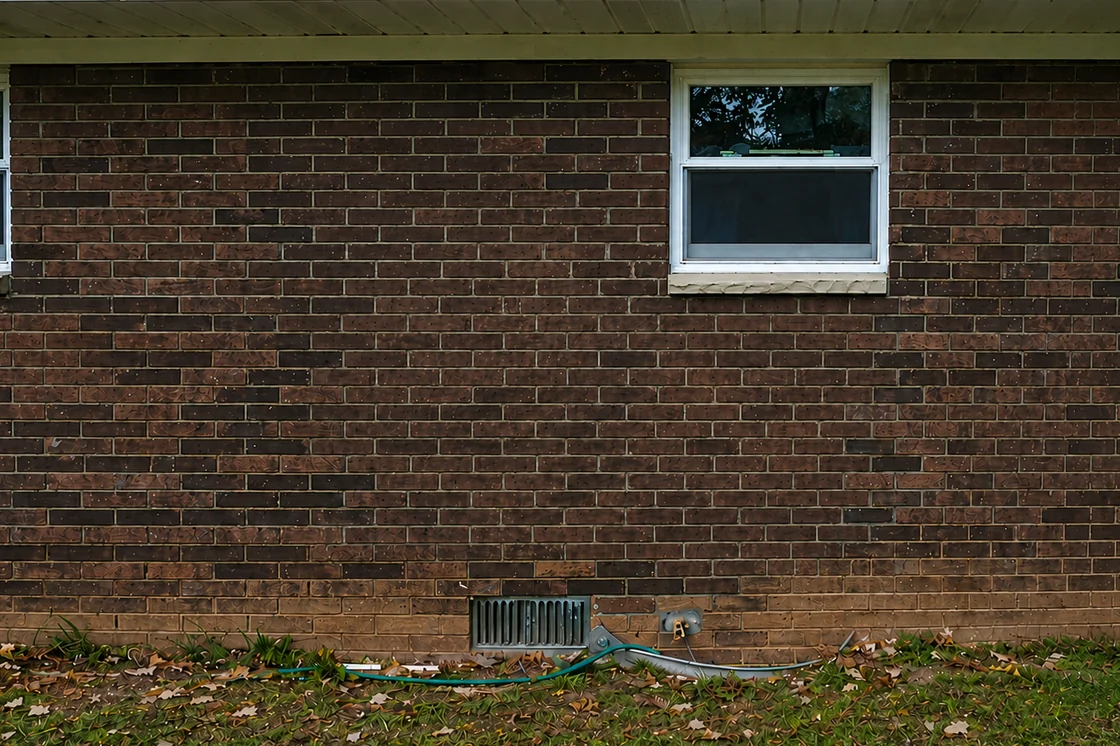
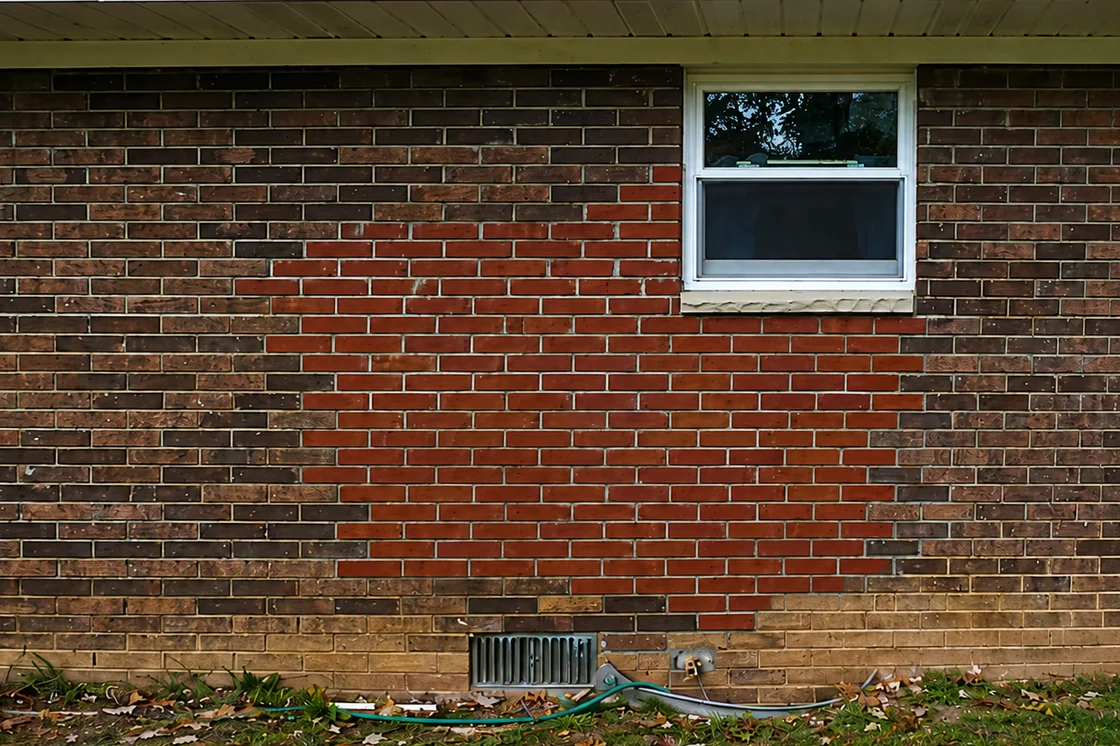
Warranty and safety documentation
The stain system is covered by Masonry Cosmetics' written transferable lifetime warranty, issued as a per-building certificate. It carries through to work applied by their certified contractors, which is the basis for the warranty on projects we apply. The certificate terms:
The color correction system will not peel, crack, blister, or flake for the color-enhanced brick on the named building.
If deterioration of the treatment occurs so that the mismatch of brick becomes visible to a casual observer, the deterioration is corrected through a reapplication of the treatment system to the affected areas of the wall, for a lifetime period from completion of the initial application.
The warranty is transferable to heirs and subsequent purchasers.
Deterioration that results from a defect in or deterioration of the wall structure or a component of it, or from an act of God.
The warranty is void if a sealer is applied after the process.
The warranty is activated upon full payment of the invoice.
Or read the summary on our warranty page.
Safety data
Safety data sheets are published for both components of the system, for jobsite files, district and municipal compliance records, and closeout documentation.
Pigment concentrates
Inorganic mineral oxide pigments in powder form, odorless and non-flammable. The SDS classifies the material as neither a physical, health, nor environmental hazard under OSHA 29 CFR 1910.1200, with no signal word assigned. Not regulated as dangerous goods for transport (DOT, IATA, IMDG) and not listed under California Proposition 65.
Bonding solution
A non-flammable, odorless aqueous solution; water makes up more than half of the mixture, with the remaining ingredient held as a trade secret. Signal word Warning: may cause mild eye irritation, mild skin irritation, and respiratory irritation. NFPA ratings Health 1, Flammability 0, Instability 0. Non-regulated material for transport.
The documented record
There is no ASTM standard for masonry stains. The Brick Industry Association notes that historically there have been no formal technical resources or ASTM Standards related to stain materials or their application, and recommends validating a staining contractor's experience through references with photos and addresses of completed projects. Decades of documented case histories are therefore the proof standard, and that is the record this system carries.
The library is photographed at completion and re-photographed on revisits, indexed by years in service. Below the 20-year span it also indexes 15 to 19, 10 to 15, and 7 to 9 years; per-span counts are not published, so none are stated here.
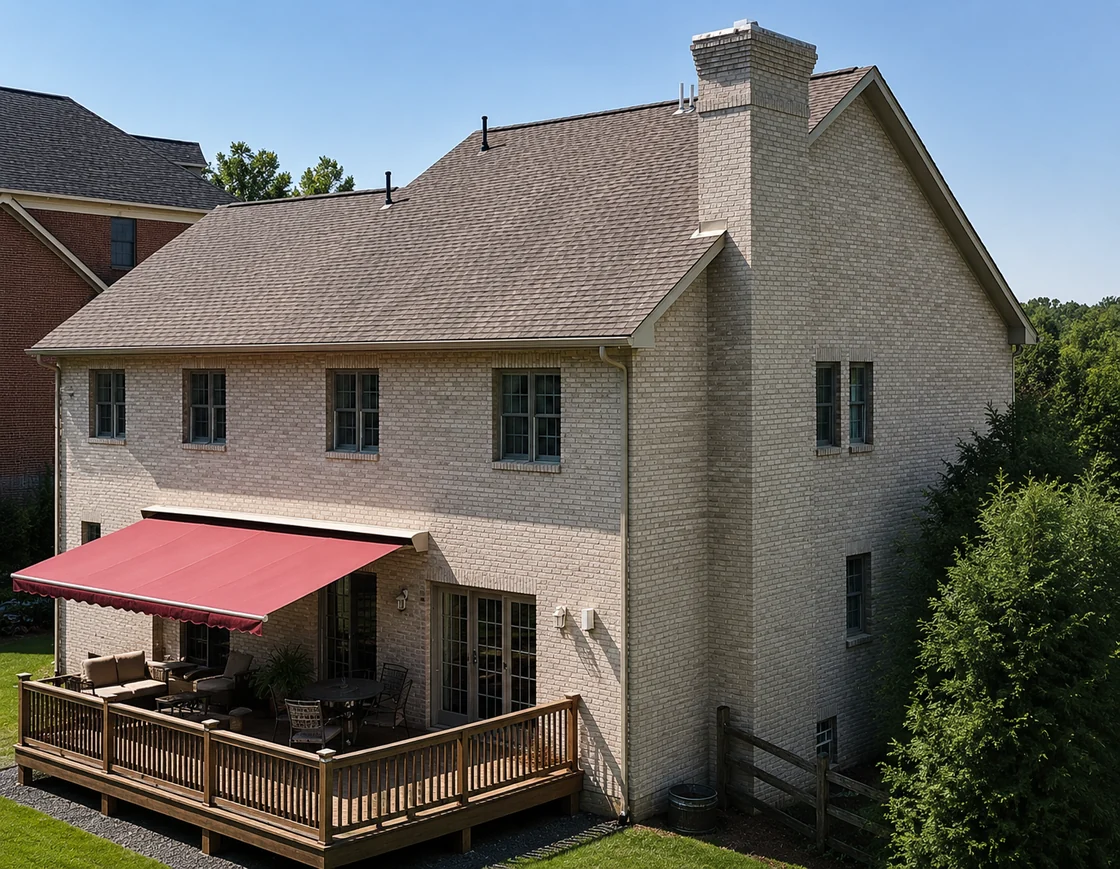
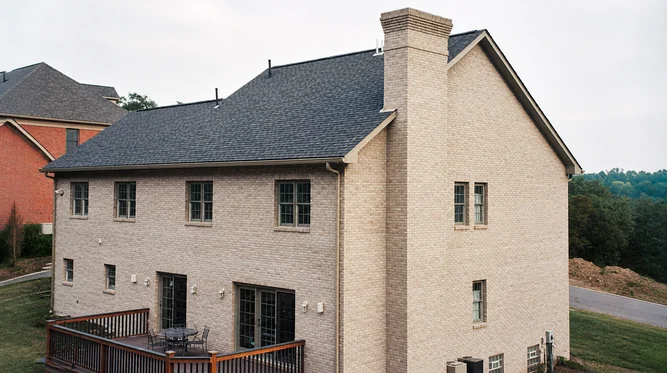
These are documented case histories, presented as the performance record of the system we apply. Revisits are part of the format: one archived project completed in 2003 carries follow-up documentation through 2020.
Documents
The source documents behind this page, grouped by what each one is needed for rather than by what it is called.
For the specification
For the jobsite file
For submittals and closeout
Independent reference
The full document library, including items still in preparation, is on the downloads and spec sheets page. Request specifications and we will send the section text with any project-specific edits marked.