Can You Remove Paint From Brick? What It Really Takes
Yes, you can remove paint from brick, but the brick can pay for it. Chemicals, power washing and sandblasting can each damage the face, depending on the type of brick. And on a wall that has been painted and repainted for years, stripping can uncover deteriorated mortar and spalled brick that need repair too.
The short answer: Yes, and the sooner the better. Paint keeps trapping moisture in the masonry, so the damage behind it never stops. There is never a point where stripping it stops being worth it.
Can you remove paint from brick without damaging it?
Not always. It depends on the type of paint, any sealers under it, and the brick itself. Some coatings will come off with chemicals. But depending on the type of brick, the stripping can damage it a great deal, whether the method is chemicals, power washing or sandblasting.
The Brick Industry Association says the same in its technical guidance: paint can be very difficult to remove from brick masonry without causing damage.
(BIA Technical Note 6, opens in a new tab)
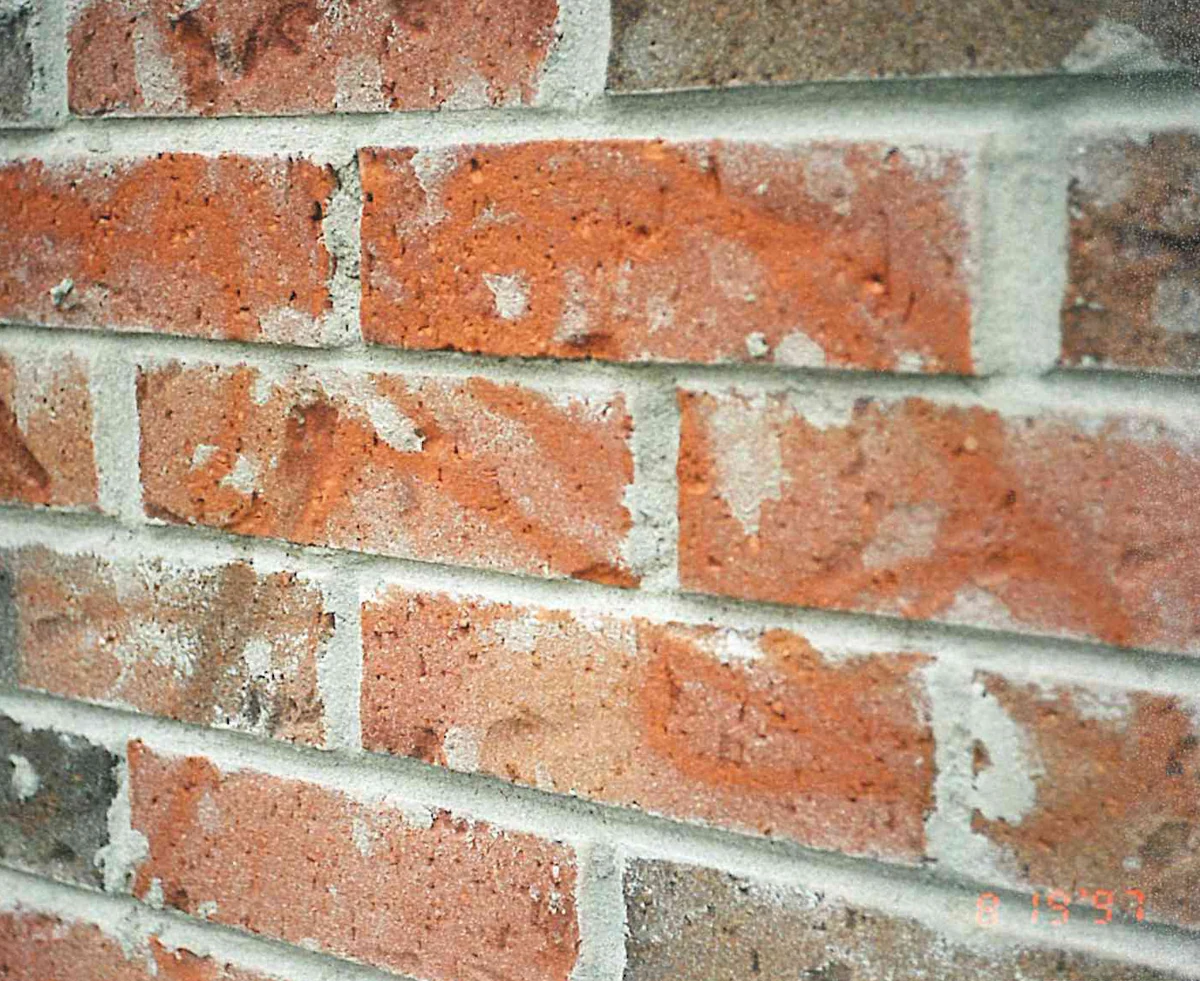
Power washing shows the risk most plainly. Water at high pressure can take the fired face right off a brick. In one documented case of pressure washer damage, the wand left pale scoured patches across a wall that was brand new. Stain later put those patches back into the color of the brick around them. What stain cannot do is put back the material the water took.
Why is painted brick so hard to fix?
Because the damage is not only in the paint. Brick is porous. It is made to take on a little water and let it dry back out. Paint seals that moisture in. When the trapped water freezes and thaws, it expands and contracts inside the brick, and the faces get blown or chipped off. That is called spalling, and it is one of the worst kinds of masonry damage. Moisture is the number one cause of masonry deterioration to begin with.
The National Park Service puts it in one line: painting brick with non-permeable paint will accelerate the decay by trapping moisture behind the new coating.
(National Park Service, opens in a new tab)
Every repaint seals the moisture in again. So on a wall that has been painted and repainted for years, the mortar may have broken down and some brick may have spalled past saving. That is what stripping uncovers, and it is why the repair can cost more than the stripping.
How much does it cost to remove paint from brick?
On a fully painted single-family home, stripping the paint alone typically runs $10,000 to $20,000. Repairs come on top of that, from about $10,000 up to $30,000 to $50,000. Where a house lands depends on how long the paint has been on, how much damage it has done, and the size of the building.
| The work | Typical range |
|---|---|
| Stripping the paint, fully painted single-family home | $10,000 to $20,000 |
| Repairing the masonry underneath, same home | $10,000 up to $30,000 to $50,000 |
| Downtown buildings and large commercial facilities | Higher, with more surface area, more stories, and structural repairs |
These are typical ranges from the field, not a quote. Your wall sets the real number. The biggest swing is whether the repairs stay cosmetic or turn structural.
When does paint damage become structural?
When enough brick has to be replaced. Paint damage climbs a ladder, and the longer the paint stays on, the higher it goes:
- Minor damage to the face of the masonry, fixed cosmetically.
- Tuckpointing, where worn mortar joints are ground out and replaced.
- Minor brick replacement, where a few spalled units come out.
- Structural repair, where so many bricks need replacing that the wall itself is compromised.
That last step is the costliest problem a painted wall can have. It is no longer about how the building looks. It is about whether the building holds. The structure may need to be shored up during the repair so nothing collapses while the brick comes out, and that adds a great deal of cost.
Is it ever not worth stripping paint off brick?
No. Paint on masonry never stops doing damage, so the problem never stops getting worse. The only real question is how long you let it go before you strip it and make the repairs.
"There is never a time that it is not worth it to strip a building of the paint," says Kate Vienna, CEO of Bramwell-McKay. "The longer that you let paint sit on a building, the worse and more costly it gets. The best thing you can do is take the paint off as soon as possible."
Take it off early and you are more likely to be dealing with cosmetic fixes and some tuckpointing. Leave it, and the wall moves closer to brick replacement, which is where the big bills are.
What comes after the paint is off?
Color, without the film. If the brick was painted for a new look, you can still have one. Mineral stain only works on masonry that absorbs, so paint and sealers have to come off first, and a water test of about a minute shows whether the brick will take it. Taking a coating off is work we do.
Mineral stain is absorbed pigment, not a coating. The color goes into the brick instead of onto it, so the wall keeps breathing and there is nothing left to peel. If you want the detail, here is how mineral stain works.
Stain also helps with the repair. Replacement brick can stand out against an old wall. On this job of ours, a patch of new brick showed bright red against a dark brown wall, and we stained it into the original masonry.
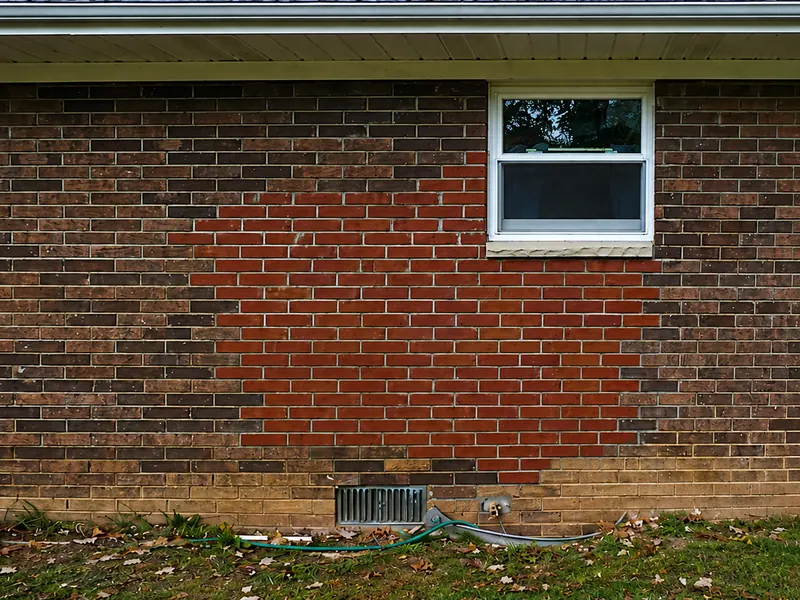 Before
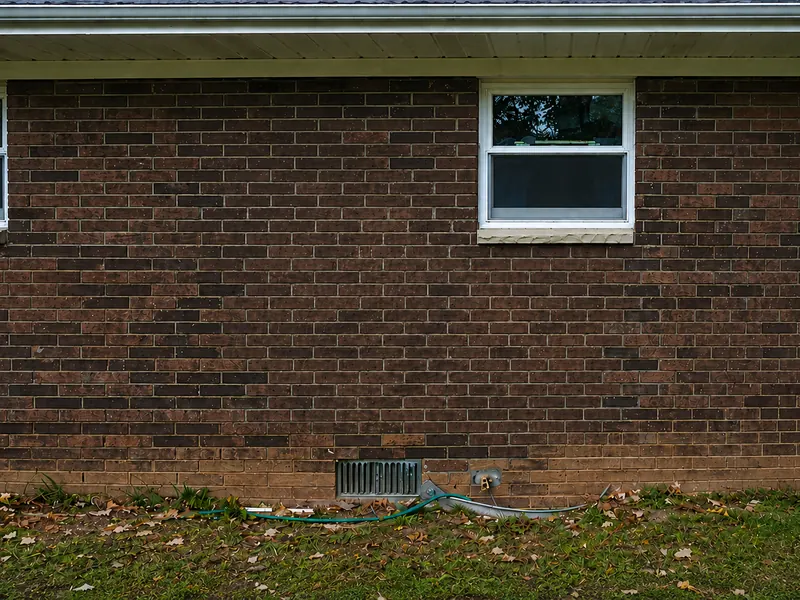 After
Matching repairs like this is part of our residential brick staining work. And if the paint is still on and you are weighing what to do next, start with brick staining vs painting: what each one costs over the life of the house, and why stain is done once.
Common Questions
Can you unpaint brick?
Yes. Paint can be stripped off brick with chemicals, power washing or sandblasting. Depending on the type of brick, any of them can damage the face. On a wall that has been painted and repainted for years, stripping can also uncover deteriorated mortar and spalled brick that need repair.
How much does it cost to strip paint off a brick house?
On a fully painted single-family home, stripping alone typically runs $10,000 to $20,000. Repairs to the masonry underneath run from about $10,000 up to $30,000 to $50,000, depending on the damage and the size of the house. Downtown and large commercial buildings cost more.
Is it worth stripping paint off brick?
Yes, every time. Paint keeps trapping moisture in the masonry, so the damage behind it never stops getting worse. The sooner the paint comes off, the fewer repairs the wall needs. Waiting moves the job from cosmetic fixes toward brick replacement, the costliest repair there is.
Can brick be stained once the paint is off?
It can, once the brick is bare, sound and absorbs water. Mineral stain soaks into the brick, so paint and sealers have to come off first. A water test of about a minute shows whether the brick will take stain.
Have Painted Brick?
Send us the building. You get a straight answer on what it needs, and what stain can do for it after.
Request a Quote