Why Paint Peels Off Brick (and What It Does to the Wall)
Paint peels off brick because brick is porous and has to breathe. Paint seals moisture into the wall, the moisture pushes back, and the film bubbles, chips, and flakes. The bigger problem is underneath: trapped water freezes and thaws inside the brick and blows the faces off.
The short answer: brick was never meant to wear a coating. Peeling is the paint losing a fight with the wall, and every round of scraping and repainting seals the moisture back in. The fix is to get the paint off as soon as you can, not to repaint it.
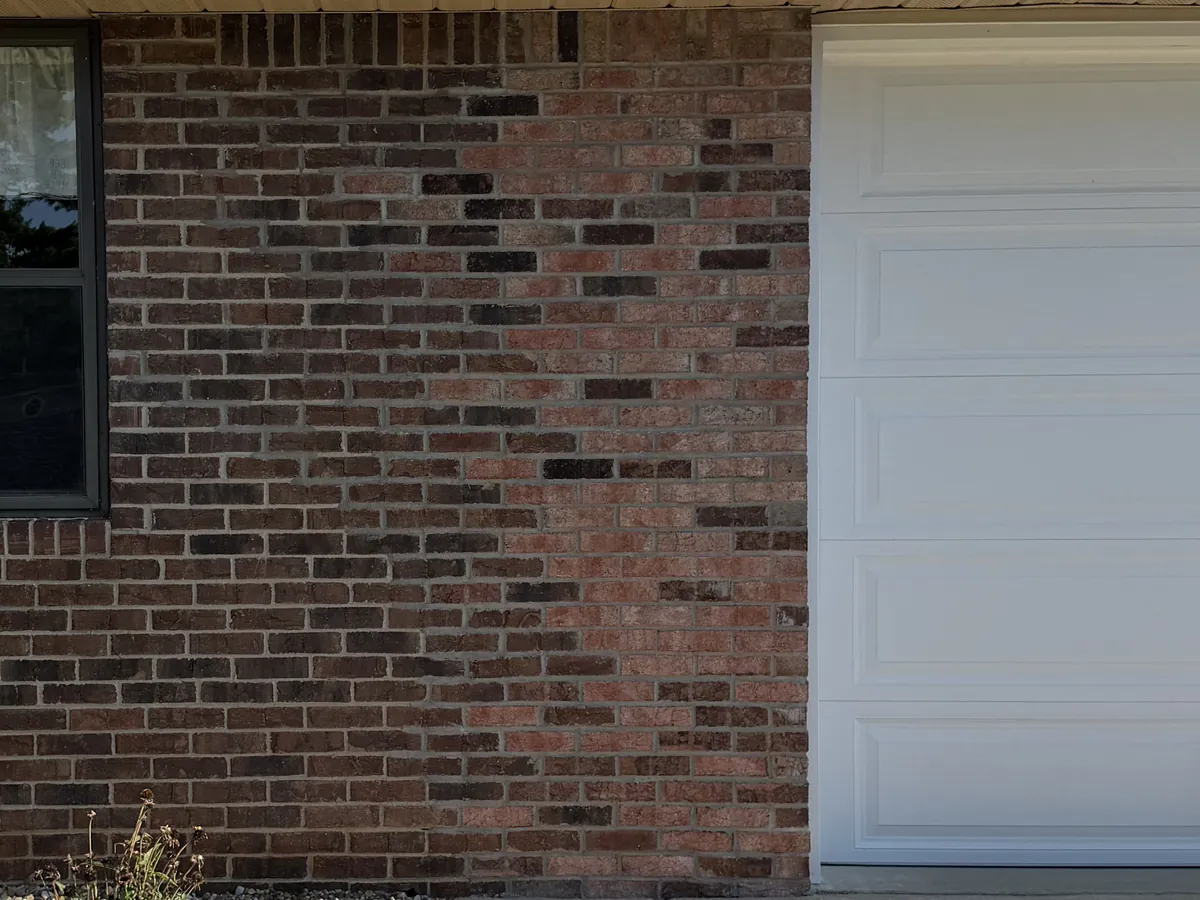
Why does paint peel off brick?
Because the brick is trying to breathe and the paint will not let it. Brick is a porous material. It is full of tiny holes that are meant to take on a little water and then let it dry back out. That is how masonry is built to work.
Paint puts a seal over those holes. Moisture still gets into the wall, but it cannot evaporate back out through the film. It gets trapped behind the paint and pushes against it from the inside. That is the bubbling, chipping, and flaking you see on the outside.
So peeling is not a sign of a bad paint job. It is the wall doing what it was designed to do, under a coating it was never designed to wear. The National Park Service says the same in its guidance on brick: painting with non-permeable paint or other coatings "will accelerate the decay by trapping moisture behind the new coating."
What is the paint doing to the brick underneath?
Holding water in it, which is the worst thing you can do to masonry. Moisture is the number one cause of masonry deterioration. Anywhere with hot summers and cold winters, the water trapped in the pores freezes and thaws over and over, and every cycle makes the brick expand and contract.
That movement causes what we call spalling. The faces of the brick get blown or chipped off. Spalling is one of the worst forms of masonry deterioration, and a face that has spalled does not come back. The peeling paint is the part you notice. The spalling behind it is the part that costs money.
Can you just scrape it and repaint?
You can, and most people do, but it never ends. Brick on its own is a maintenance-free material. It takes care of itself over the years. The day it is painted, it becomes a maintenance material.
To keep painted brick looking the way it should, you have to work against the wall. That means chipping, sanding, or stripping the loose paint and putting a new coat on. On most homes that comes around about every five years, and the range we see runs from 5 to 10. Each round typically costs $5,000 to $10,000.
Each round also seals the moisture back in, so the brick under the new coat keeps getting worse. The Brick Industry Association describes acrylic latex paint on brick the same way: it "creates a recurring exterior maintenance task, requiring multiple reapplications."
What does peeling paint on brick end up costing?
Far more than the paint did. These are the ranges we see on a typical home:
| Step | Typical cost | How often |
|---|---|---|
| Painting the brick | $8,000 to $15,000 | Once, at the start |
| Strip or sand, then repaint | $5,000 to $10,000 | Every 5 to 10 years, for as long as the paint stays |
| Tuckpointing the whole home | $20,000 to $50,000 | Eventually, once the mortar gives out |
| Replacing spalled brick | The most costly repair there is | Worst case |
| Staining the brick instead | $15,000 to $30,000 | Once |
Paint looks cheaper on day one. Add two rounds of repainting to the first coat and you are at or past the price of staining, with the tuckpointing still ahead of you and a wall in worse shape than when you started.
The paint is already peeling. What now?
Get it off, and the sooner the better. There is never a point where stripping paint off masonry stops being worth it, because the wall never stops deteriorating while the paint is on. The longer the paint stays, the bigger the repair. In rough order, the damage climbs like this:
- Minor damage to the face of the brick that can be fixed cosmetically.
- Tuckpointing, where worn mortar joints are ground out and replaced.
- Replacing some of the brick.
- Replacing enough brick that the problem becomes structural. Now the building may need to be shored up during the repair so it does not collapse, and the cost climbs a great deal.
Taking paint off is not gentle work. Depending on the paint, any sealers on top of it, and the type of brick, the chemicals, power washing, or sandblasting used to strip it can damage the brick a great deal. Some of the damage paint has already done cannot be undone. That is why this is a job for people who know masonry.
On a fully painted single-family home, stripping alone can run $10,000 to $20,000. Repairs run from about $10,000 up to $30,000 to $50,000, depending on the size of the house, how long the paint has been on, and how much damage it has done. Downtown buildings and large commercial buildings go up from there.
What can go on brick that will not peel?
Mineral stain. It is absorbed pigment, not a coating: the color goes into the brick instead of onto it. There is no film on the surface, so there is nothing to bubble or flake, and the brick keeps breathing the way it was built to.
The stain we apply carries a transferable lifetime warranty that says it will not peel, crack, blister, or flake. You can read the full warranty terms before you ever call us.
Stain has to soak into the brick, so it cannot go over paint. The paint and any sealer come off first. Then a water test, which takes about a minute, tells us whether the brick will take stain. If your brick has never been painted, you are in the easy spot: a full home brick color change with stain is done once.
If you are still weighing the two, our guide to brick staining vs painting lays out the lifetime numbers side by side.
Common Questions
Have a Wall in Mind?
Send us the building. You get a straight answer on what stain can do for it.
Request a Quote