Is Brick Staining Worth It? Who It Is Right For
Brick staining is worth it for almost any brick home you plan to keep, sell, or hand down. It costs more than paint the first time, and then it is finished: no repaint rounds, a lifetime warranty in writing, and a color the next owner can still change. We have never told a homeowner not to stain, or to wait.
The short answer: yes, if you want the color change to last. Stain is a bigger bill once. Paint is a smaller bill that comes back every 5 to 10 years, and it wears on the brick underneath while it does.
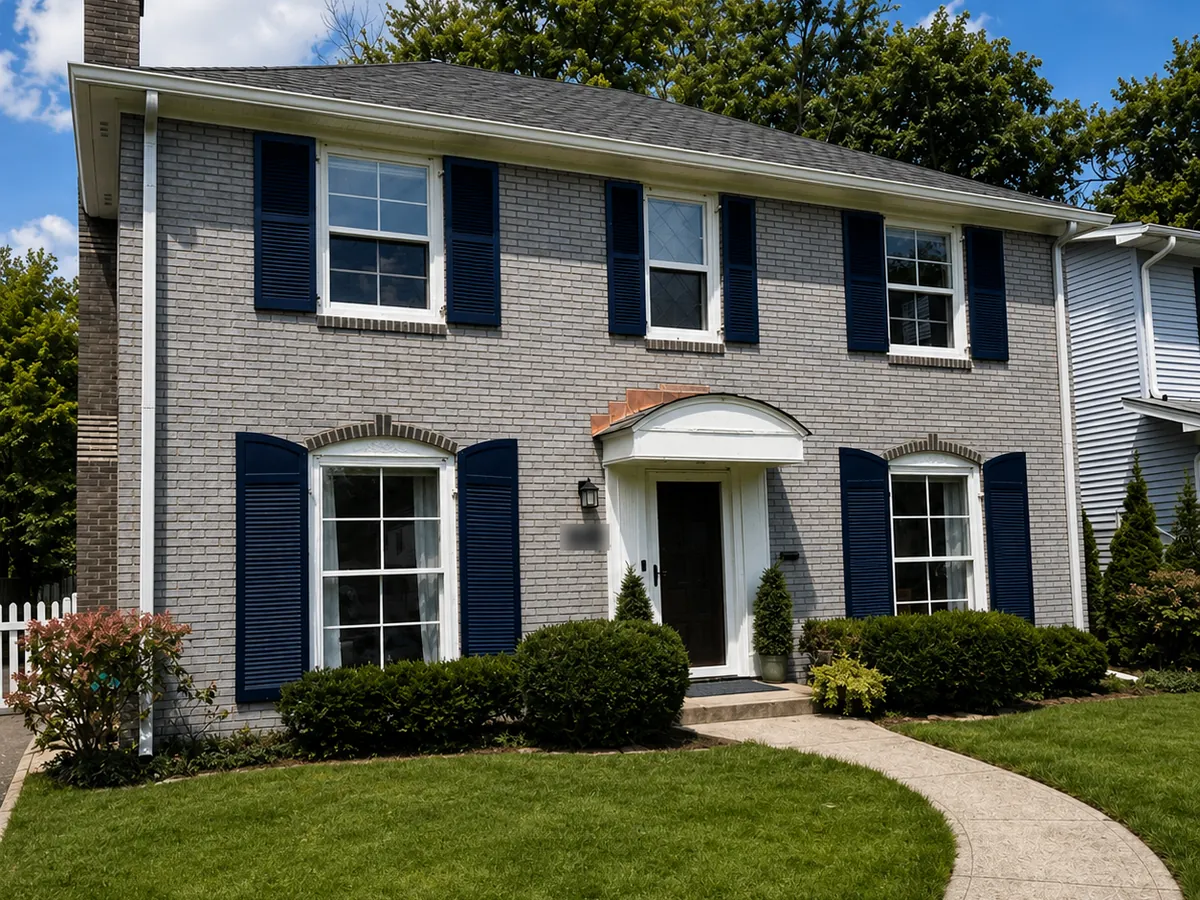 After
Is brick staining worth the cost compared to paint?
Yes, once you count past the first bill. Here are the numbers we see on a typical home.
| Cost | Painting brick | Mineral stain |
|---|---|---|
| First time | $8,000 to $15,000 | $15,000 to $30,000 |
| Upkeep | Stripped or sanded and redone every 5 to 10 years, $5,000 to $10,000 a round | None |
| After two rounds of upkeep | $18,000 to $35,000, and still going | The same as the first bill |
| What it does to the brick | Seals moisture in, which leads to spalling | The brick keeps breathing |
Each repaint costs more than the one before it, and the damage underneath keeps adding up. Brick is porous and is meant to breathe. Paint seals moisture into it, and when that moisture freezes and thaws, the faces of the brick can chip or blow off. When that catches up with a house, tuckpointing the whole home runs $20,000 to $50,000. Paint turns brick from a material that looks after itself into one you have to keep fixing. The full lifetime math is in our brick staining vs painting comparison.
Who is brick staining right for?
Almost anyone whose brick will take stain. We have never told a homeowner not to stain their house, and we have never told anyone to wait. It is not a one-way decision, which takes most of the risk out of it.
The one thing we ask is that you feel confident in the color you pick. That is what the sample panel is for. We stain a patch of your own wall and keep adjusting it until it is right, and nothing else gets stained until you say yes. The panel is $1,800 and comes off your final bill. The design is not frozen once we start, either. While the crew is staining, you can still ask us to shift it a little. If you are still choosing, look through what is possible with brick stain colors first.
Two kinds of owners tend to be the happiest with it: people holding a house for the long haul, and people who want a new color without losing what makes brick look like brick. The two Indianapolis homes below are one of each.
The Hayden House: a long-term owner chooses stain over paint
The Hayden House is a two-story 1940s home in Indianapolis that now runs as a bed and breakfast. Its yellow brick looked dated, and the owners wanted a solid slate gray.
A solid color is the one look paint can come close to, and paint would have cost them less. They thought about it. But they planned to hold this home for a long time, and they wanted its value to stay up. Keeping paint looking right, year after year, was a headache they did not want. They chose the one-time cost of stain.
The brick did not make it easy. It was very hard and non-porous, so it took four to five coats of gray stain to reach an even, solid color. Coats are time on the wall, and time is what moves a price the most. The full exterior came to just under $30,000. In their Google review, the owner put it this way: "So many folks paint brick, but staining is really the way to go for a long term solution."
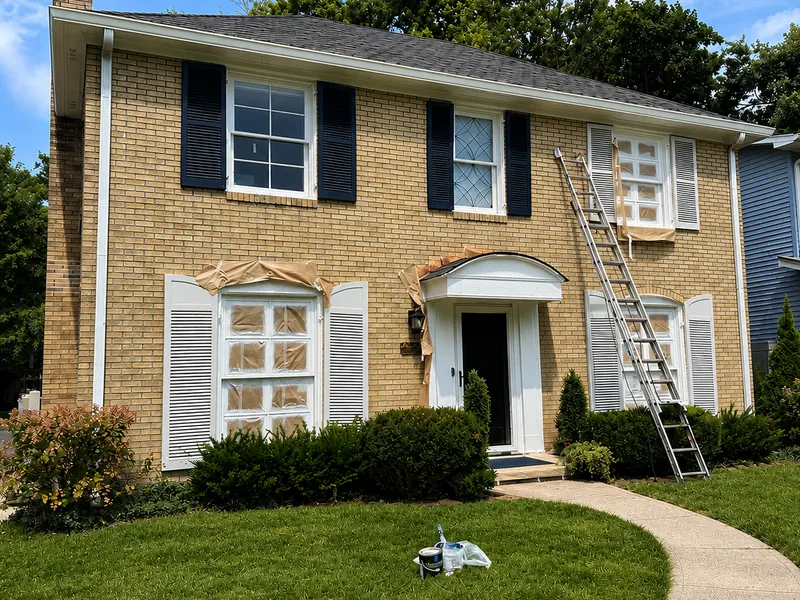 Before
Keeping the brick's character: red to four or five grays
Another Indianapolis homeowner had multicolor red brick and wanted multicolor gray. She did not want one flat color. She wanted to keep seeing the variety from one brick to the next, with the mortar showing as its own color in between. Her house went to four or five different grays.
Paint could not do that. Paint covers the brick and the mortar alike, so the wall reads as one solid sheet.
She did look at a cheaper option: a product sold as stain that is really thinned paint. It would have shown some of the variation. But it is still a coating, so it would still bubble, crack, and peel, the color would fade, and it would be bad for her brick. That is why our own spec rules out paints, stains with acrylic in them, and semi-transparent or opaque stains.
She chose mineral stain even though it cost more. It was the only way to get the finish she actually wanted, and she knew she would never have to think about upkeep again.
What if you change your mind about the color later?
Then it can be stained again. Mineral stain is made from the same natural mineral pigments used to color brick when it is made. It soaks into the brick instead of sitting on top, and it does not change the brick's structure or texture. So a new color later is another round of stain, not a teardown.
That stays true for whoever owns the house next. If you sell it or pass it down, the new owner can change the color too. Going darker or richer is the easy direction. Going lighter depends on the brick and usually takes more work.
How long does brick stain last?
For the life of the masonry, and it is in writing. Every job comes with a lifetime brick stain warranty on workmanship and materials. It states that the stain will never peel, crack, blister, or flake. If the color ever wears enough that a casual observer would notice, the affected area gets a fresh application at no cost to you. The warranty transfers to the next owner when the house sells.
There is no upkeep schedule. If the brick needs cleaning, plain water does it, and the pressure washer stays in the garage. The warranty does not cover acts of God or problems that start in the wall itself, and putting a sealer or any coating over the stain voids it.
When is staining not the answer?
When the brick cannot take it. Stain has to soak in, so the wall has to absorb water. Glazed brick cannot be stained, and some very dense brick will not take stain at all. A water test answers that in about a minute.
Brick that already has paint, a sealer, or waterproofing on it needs that coating taken off before it can be stained. That is work we do as well. None of this is a reason to skip staining a house. It is a question about the brick, and the brick answers it before anyone signs anything.
So, is brick staining worth it? If you plan to keep the house, or you want your brick to still look like brick, it is. You pay for it once, and the color stays.
Common Questions
Find Out What Your Brick Can Do
Send us the house. You get a straight answer on whether stain is right for it, and a firm written quote.
Request a Quote